
From Fear to Fun: Transforming Mealtime with Games and Gradual Exposure
Understanding Mealtime Anxiety
For many families, mealtime is a chance to connect and share stories. But for children with sensory sensitivities, autism, or developmental challenges, mealtime can feel like a battlefield. The clatter of utensils, the smells of unfamiliar foods, and even the textures on their plates can spark anxiety, refusal, and meltdowns. It’s not just about being a “picky eater.” It’s about real discomfort—and for some, even distress.
Why Some Kids Feel Stressed About Food
Children with sensory processing differences may react strongly to certain tastes, textures, or temperatures. For example:
- Crunchy carrots may feel too loud or hard.
- Mashed potatoes may seem too mushy or sticky.
- Fish may smell overwhelming, even across the room.
These reactions aren’t just preference—they are rooted in how a child’s brain interprets sensory input. Food becomes a sensory challenge rather than nourishment.
Other factors can contribute to mealtime stress:
- Negative past experiences (e.g., choking, forced feeding)
- Lack of routine around meals
- Pressure to eat when not ready
- Communication delays, making it hard to express discomfort
Common Signs of Food Aversion
It’s helpful to recognize the signals that a child may be struggling:
- Gagging or vomiting when new foods are introduced
- Covering nose or mouth at the table
- Crying or tantrums at mealtime
- Extremely limited preferred foods (e.g., only beige foods, or only crunchy textures)
- Eating only when distracted (e.g., in front of a screen)
- Anxiety or dread at the mention of meals
Rather than force a child to eat, a more effective strategy involves building positive associations with food—starting with play and gradual exposure.
The Power of Play in Mealtime
Play is a child’s natural language. Through play, they explore the world, test boundaries, and make sense of new things—including food.
Turning Food Into a Game
Introducing food-related games can reduce fear by reframing food as something fun and safe to explore. Here are a few engaging examples:
1. Food Bingo
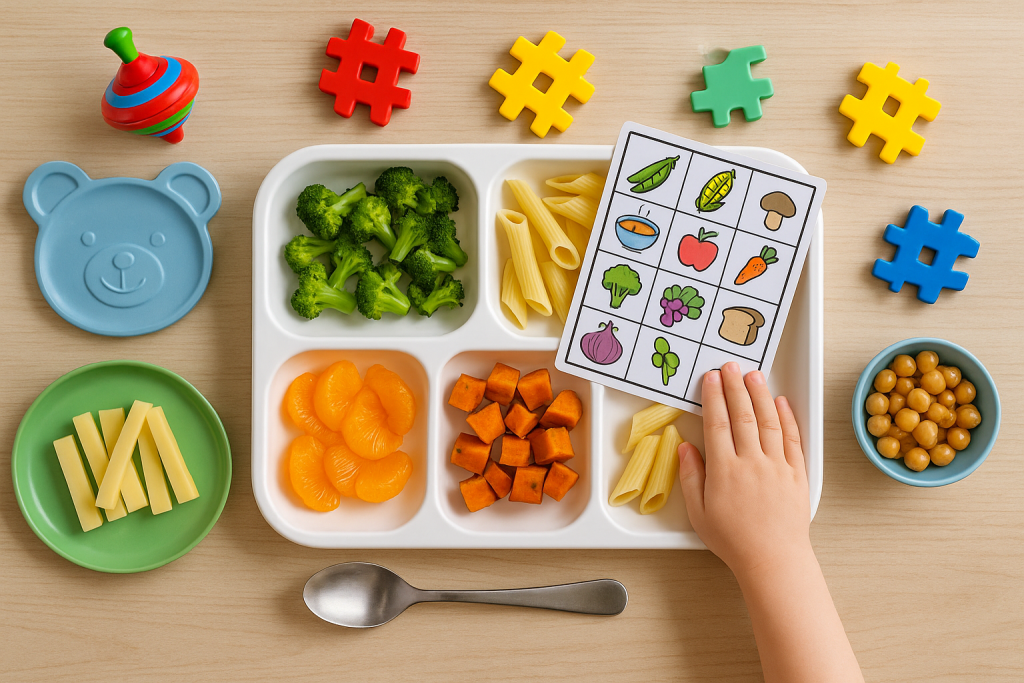
Create bingo cards with different food images. As you and your child explore these foods (even just by touching or smelling them), they get to mark off the squares. Add rewards for completing rows—like choosing a fun sticker or picking tomorrow’s activity.
2. Texture Treasure Hunt
Let your child sort different foods by texture: soft, crunchy, slippery, chewy. Use safe, bite-sized pieces. Encourage touching and talking about the textures without requiring them to eat.
3. Food Painting
Use yogurt, purees, or food-safe coloring to “paint” on a plate or wax paper. Let them finger-paint or use veggie sticks as brushes. This boosts sensory tolerance and builds familiarity.
4. Mystery Food Bag
Put various foods in a bag and let your child reach in, feel, and guess what’s inside. Keep it fun and low-pressure—no eating required unless they choose to.
5. Build-A-Plate
Give your child a divided plate and let them build their own meal. Include at least one “safe food” and a few “learning foods” to explore. Being part of the process helps reduce anxiety.
Encouraging Food Exploration Without Pressure
It’s critical that food play is pressure-free. That means:
- No bargaining (“Just one bite!”)
- No bribes (“If you eat this, I’ll give you dessert.”)
- No punishments or guilt
Instead, use positive language:
- “Wow, you touched it! That’s brave.”
- “You smelled it—that’s a step forward!”
- “You licked it—you’re a food explorer!”
Each interaction, no matter how small, builds trust and confidence.
Gradual Exposure Techniques
Gradual exposure is a method rooted in behavioral science. It helps children tolerate, and eventually accept, challenging foods in a way that feels safe and empowering.
The Steps of Food Exposure
- Look – Start by simply having the food on the table or plate.
- Touch – Allow the child to touch the food with fingers or utensils.
- Smell – Invite them to sniff the food. Try making it a guessing game.
- Kiss or Lick – A brief interaction like a “food kiss” can feel like a big win.
- Bite and Spit – Let them bite and spit without pressure to swallow.
- Bite and Swallow – Only when they’re ready, encourage small bites.
Every child will move through these steps at their own pace. Celebrate every win and never rush.
Making It Low-Stress
- Keep portions small.
- Pair new foods with favorites.
- Introduce one new food at a time.
- Allow them to spit into a napkin if needed.
- Stay calm and model enjoyment of the food yourself.
Gradual exposure isn’t about tricking a child into eating—it’s about helping them build trust with food over time.
Creating a Safe and Fun Mealtime Environment
The setting in which children eat plays a big role in how they feel about food. A predictable and calming environment can reduce anxiety and promote positive mealtime behavior.
Visual Schedules and Mealtime Routines
Children with autism or anxiety often benefit from clear, visual cues. Consider:
- A picture schedule showing the steps of mealtime: wash hands → sit at table → food play → cleanup
- Timers to signal transitions
- Consistent timing for meals and snacks
Structure builds confidence and makes expectations clear.
Praise, Modeling, and Reinforcement
Kids learn by watching others. Eat together as a family when possible, and let your child see you trying and enjoying a variety of foods. You don’t need to comment on their eating—just model curiosity and calm.
When they take a step forward, offer meaningful praise:
- “I saw you touch the apple slice—great trying!”
- “You didn’t cry when we brought out broccoli—awesome job staying calm.”
Use a reward system if helpful (stickers, tokens, or choosing a bedtime story). Reinforce the behavior, not the outcome.
Stories of Progress: Meet Liam
Liam was a 5-year-old diagnosed with autism. His diet was limited to chicken nuggets, plain crackers, and apple juice. His parents were worried about his health and frustrated by mealtime battles.
They started working with a pediatric dietitian and occupational therapist. Together, they created a food exposure chart and introduced playful food activities three times a week.
The first game was food painting using yogurt tinted with natural colors. Liam refused to touch it at first, but after a week, he dipped a toy car in and ran it through the “paint.” His sensory tolerance slowly grew.
They used food bingo to introduce new visuals and smells. At week four, he licked a banana. By week eight, he took a small bite of scrambled eggs.
Now, six months later, Liam eats over 15 foods—including watermelon, cheese, and carrots. Mealtimes are calmer, and his family celebrates his progress without stress.
Take the First Step: Transform Mealtimes With Us
If your child struggles with mealtime anxiety or has a very limited food range, you’re not alone—and you don’t have to face this challenge without support.
At UA Homecare, our registered dietitians specialize in working with children with autism and sensory sensitivities. We create personalized meal strategies based on your child’s needs, preferences, and developmental stage.
✨ Our Dietitian Services Include:
- Nutritional assessments
- Food exposure plans
- Sensory-friendly food introduction
- Parent coaching and home strategies
- Collaboration with OT and speech therapists
✅ Try This Today: Food Bingo Challenge!
Print or draw a simple food bingo card with pictures of different fruits, veggies, and snacks. Sit with your child and explore the items together—no pressure to eat. Celebrate each square they interact with!
💡 Book a consultation today and start your journey from fear to fun at mealtimes.

